
Resources
Natural Stone vs Manufactured Stone
We only press concrete, so this is the comparison including the part that costs us sales — the three cases where quarried stone is the right answer.
By Miami Stone Veneer Specialists · Updated July 12, 2026
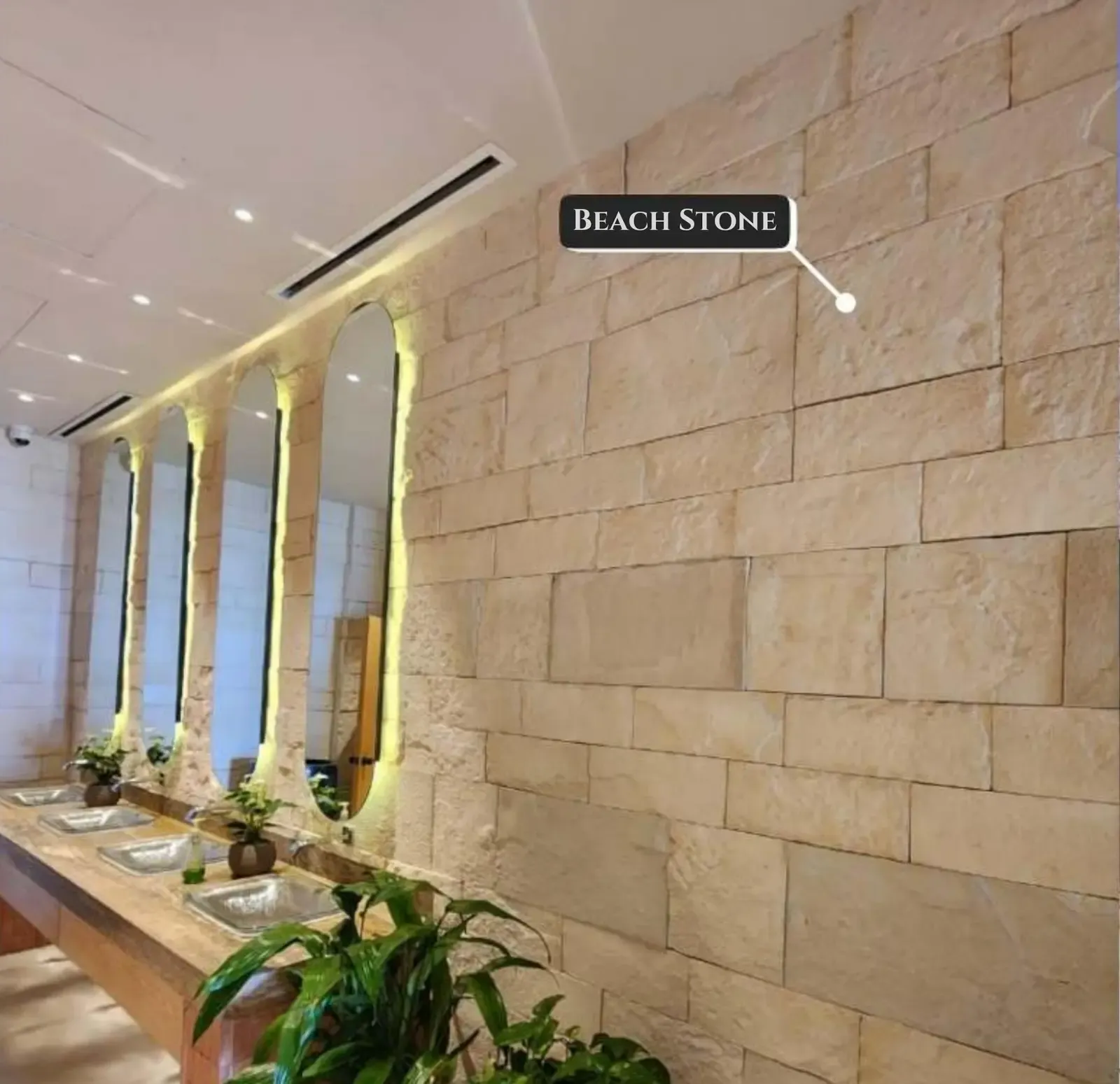
Miami Stone Veneer Specialists only sells manufactured stone, which makes this a comparison with an obvious bias. So we've written the part that costs us money first: there are three cases where you should buy quarried stone from someone else, and they're further down this page.
What actually differs
Natural stone veneer is quarried rock sawn thin. Manufactured stone veneer is concrete cast in moulds taken from quarried rock, coloured through the body.
Everything else follows from that. Natural is heavier because rock is dense. It's more expensive because quarrying and freight cost money. It never repeats because geology doesn't. Manufactured is lighter, cheaper, more consistent — and it repeats, because there are only so many moulds.
Side by side
| Manufactured | Natural | |
|---|---|---|
| Material per sq ft | $9 – $19 | $25 – $60 |
| Installed per sq ft | $22 – $38 | $55 – $110 |
| Weight | 11 – 15 psf | 35 – 50 psf |
| Structural support | Rarely needed | Often needed |
| Waste allowance | 10% | 15%+ |
| Repetition | Yes, mould-based | None |
| Colour consistency | High | Varies by batch |
| Lead time | Stocked | 3 – 6 weeks |
Where manufactured wins
- Anything above ground floor. A third of the weight means no structural conversation.
- Large elevations. The cost difference on 1,200 square feet is $30,000 or more. Put it into a better installer and better sealer.
- Interiors on framed walls. Condo accent walls are only possible because of the weight.
- Anything on a schedule. Stocked versus quarried to order.
- Colour-critical work. Batch consistency is far better.
The three cases for natural
1. Historic properties. If a review board or a spec requires quarried material, that's the end of the discussion. Coral Gables has plenty of these.
2. Close-contact surfaces. A bar top, a bench, a vanity, a seat wall. Where hands rest on it, the density and coolness of real stone is genuinely felt, and concrete doesn't fake it.
3. Full-bed structural work. If the stone is doing actual structural work rather than facing, it's masonry, not veneer, and it's a different product entirely.
Outside those three, manufactured is the better buy almost every time — which is convenient for us, but it's also true, and the table above is why.
Can people tell?
Beyond fifteen feet, essentially nobody. Which covers most facades.
Up close there are three tells. Repetition — scan a wall and you'll eventually find the same face twice. Touch — concrete is warmer and duller than stone. Edges — a sawn natural edge exposes real geology, while a moulded edge is uniform.
Only the first matters at a distance, and it's the one you can design around: choose collections with six or more formats, and mix formats on large elevations. Our Rustic and Galarza ranges are built for exactly this.