
Resources
Can Manufactured Stone Get Mold?
Mold on stone is almost never a stone problem. It's a drainage-plane problem, and it starts behind the wall.
By Miami Stone Veneer Specialists · Updated June 26, 2026
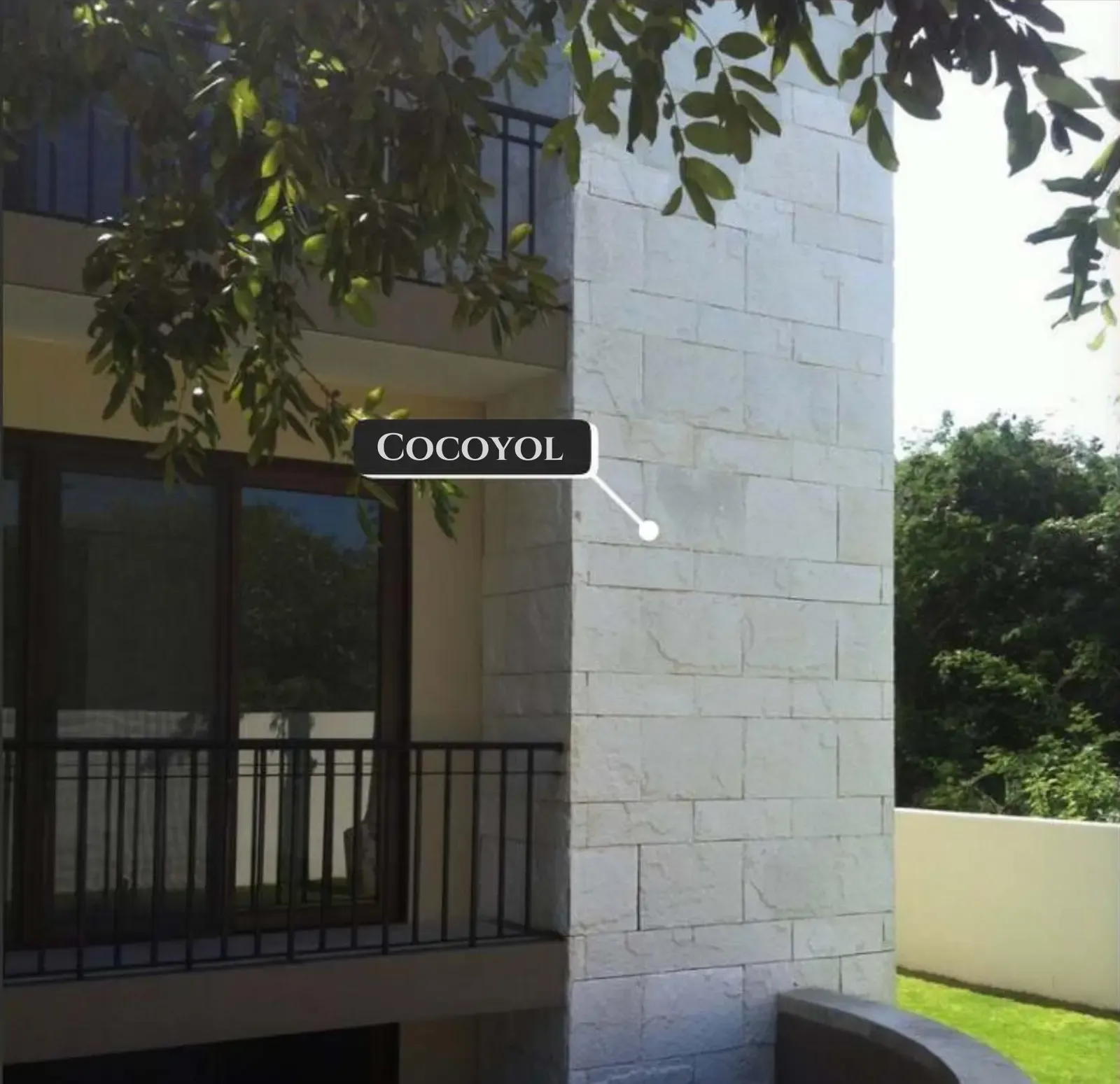
This question comes up constantly in South Florida and the honest answer has two halves. Miami Stone Veneer Specialists deals with both, and they are completely different problems.
The short answer
The stone can't feed mold. It's cement, sand, and pigment — there's no organic material in it. Mold needs food, and concrete isn't food.
What does happen is surface growth: algae, mildew, and lichen colonising a damp, shaded face, feeding on airborne organic dust rather than the stone. That's cosmetic.
And separately, mold in the wall assembly behind the veneer, where there is plenty of organic material — sheathing, framing, paper-faced products. That's a real problem, and it has nothing to do with the stone except that the stone is hiding it.
Surface growth vs a real problem
| Surface algae | Assembly moisture | |
|---|---|---|
| Looks like | Green or black film, patchy | White efflorescence streaks, dark damp patches |
| Where | Shaded elevations, near irrigation | Below windows, at roof junctions, base of wall |
| Returns after cleaning | Slowly, seasonally | Quickly, same spot |
| Interior signs | None | Musty smell, peeling paint, damp patches |
| Serious? | No | Yes |
The test that matters: does it come back in the same place, quickly, after you clean it? Seasonal green film on a north wall is normal. A white streak that reappears below the same window every few weeks is water moving through the wall and carrying minerals out with it.
What's happening behind the wall
Stone veneer is a rain screen. Water gets behind it — always, by design. The assembly has to let that water drain and let the wall dry.
When it can't, you get a permanently damp cavity against organic sheathing at Florida temperatures. That is close to an ideal mold incubator, and it's entirely invisible from outside until it's advanced.
The usual causes:
- Single-layer weather barrier with no drainage gap
- No flashing at window heads or roof-to-wall junctions
- No weeps at the base, so water pools at the bottom of the cavity
- Film-forming sealer stopping the wall drying outward
- Irrigation soaking the wall daily
Preventing it at install
All of this is decided before the first stone goes up, and it costs very little at that stage:
- Two-layer drainage plane on any framed wall
- Metal lath fastened into framing
- Head flashing at every opening
- Weep screed at the base, kept clear of soil and paving
- Breathable penetrating sealer only
- Sprinklers aimed away from the wall
On concrete block construction — which is most South Florida housing — the risk is far lower, because block doesn't rot and there's no organic sheathing. This is primarily a framed-construction issue.
If you already have it
Surface algae: clean it with a masonry-safe biocide, fix the cause — trim planting for airflow, redirect irrigation — and move on. Guidance in how to clean manufactured stone.
Suspected assembly moisture: don't clean the outside and hope. Get it opened up and inspected at the worst area. It's a bad day and a real cost, and it is dramatically cheaper than the same conversation three years later when the framing has gone.