
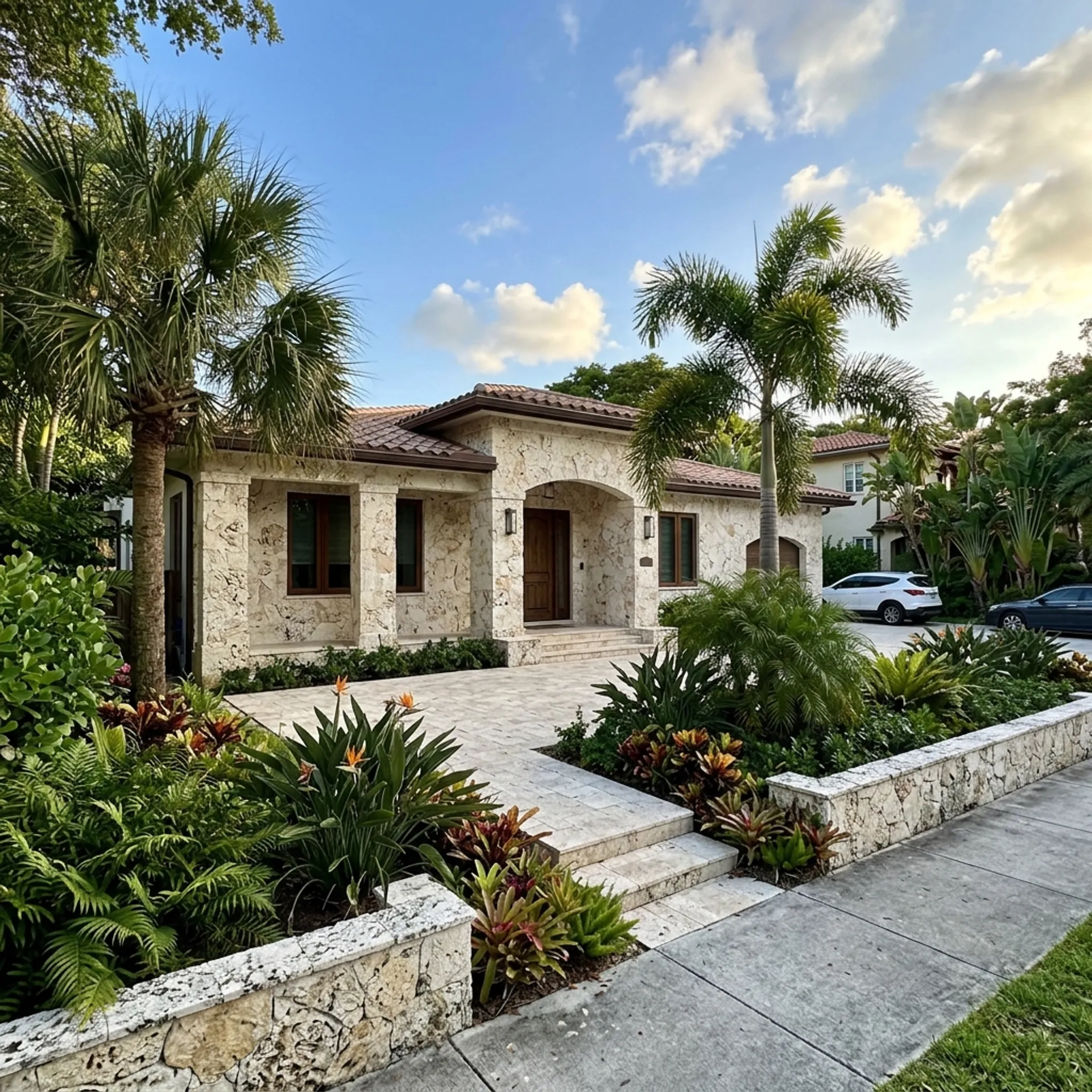
Coral Stone & Keystone Veneer Installation in Miami, FL
The signature material of South Florida — installed by people who know exactly how it behaves in this climate.
Miami Stone Veneer Specialists installs authentic coral stone, Florida Keystone, and shellstone veneer for homeowners and builders throughout Miami-Dade who want the real South Florida look — not a manufactured imitation of it. We've been working with these materials long enough to know where most installs fail and why.
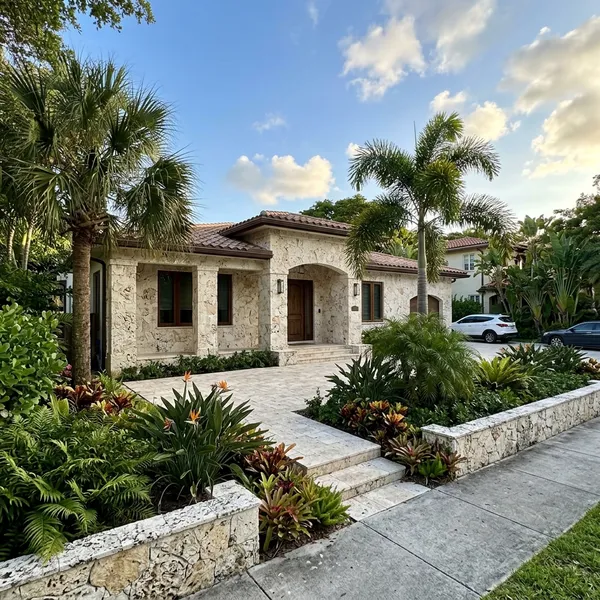
Coral stone and Keystone are the materials that built Coral Gables, Star Island, and the historic estates along Brickell Avenue. They're quarried from the Miami Limestone formation — a porous oolitic limestone unique to South Florida — and no manufactured panel gets close to the texture, fossil detail, or color variation you get from the real thing. If you've seen a home in this area and thought "that's the look," there's a good chance it was Keystone or coral rock.
One thing homeowners often don't know: coral stone and Keystone stay noticeably cooler than darker stones under direct sun. The pale, porous surface reflects heat instead of absorbing it. On a west-facing facade in Miami that bakes from noon to sunset, that difference is real — you can feel it when you put your hand on the wall at 4pm versus touching a dark granite or slate surface. For exterior facades, that thermal property matters.
Shellstone is the smoother cousin of Keystone — same Florida limestone family, slightly denser, with visible shell and marine fossils in the face. It's popular for entryways, column wrapping, and pool surrounds where you want a refined look without going completely smooth. We work with all three: coral rock, Keystone, and shellstone, and we'll help you pick the right material for the specific application.
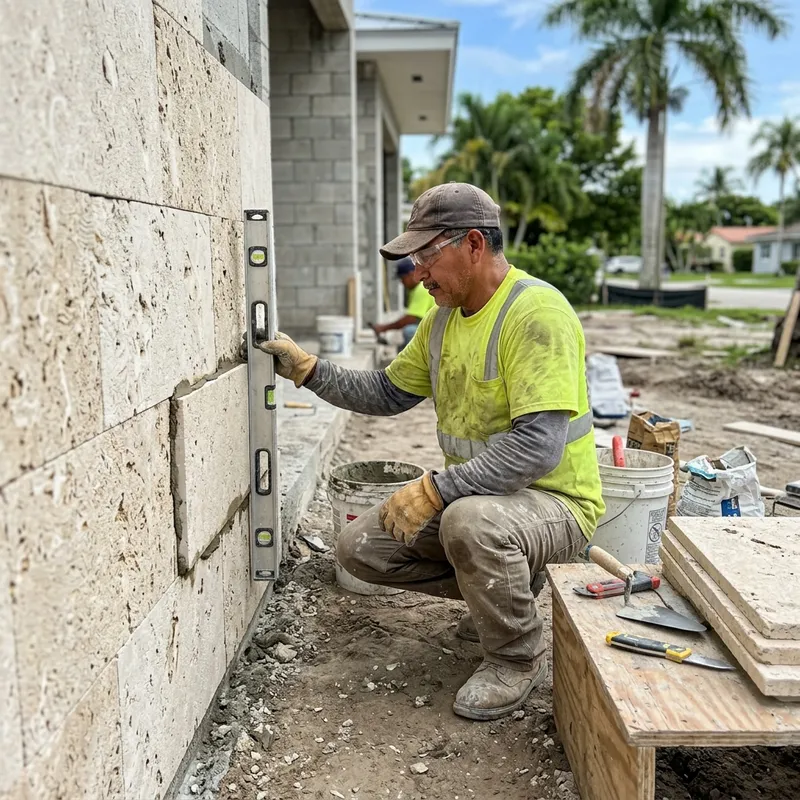
The installation process for coral stone veneer is different from manufactured stone. The material is heavier, the cut edges are irregular, and the mortar selection matters more because the stone is porous — the wrong mortar will telegraph staining through the face over time. We use a portland-based scratch coat with a polymer additive for flexibility, and we back-butter every piece before setting. It takes longer. It holds better.
Sealing is non-negotiable for coral and Keystone installations in South Florida. The porosity that makes the stone look beautiful also makes it a sponge for salt air, algae, and mildew if left unprotected. We apply a penetrating silane-siloxane sealer after the mortar fully cures — it goes into the stone rather than sitting on top, so it doesn't change the appearance but does lock out moisture and salt deposits. We re-recommend sealing every 5–7 years depending on coastal proximity.
Where We Install Coral Stone Veneer
We install on exterior facades, entryway columns, garden walls, foundation skirts, pool feature walls, and interior accent applications. Coral Gables, Coconut Grove, Pinecrest, Palmetto Bay — these are the neighborhoods where Keystone belongs. We also get calls from homeowners further north in Doral, Hialeah, and North Miami who want the South Florida look without the South Florida house prices.
If you're doing a renovation and the existing exterior is stucco, we handle the conversion. There's a specific substrate prep process for installing Keystone over stucco — we don't skip it. If we skip it, the veneer fails in 3–5 years. Done right, it lasts 30.
Ready to get started?
We'll come out, look at the project, and give you a straight number. No vague estimates.
- ✓ Licensed & Insured in Florida
- ✓ Coral Gables & Miami-Dade Permitted Work
- ✓ Natural Keystone Sourced Locally
- ✓ Penetrating Sealer Included
Coral Stone Installation Process
Coral Stone Veneer — FAQ
What's the difference between coral stone, Keystone, and shellstone?
Does coral stone hold up in Miami's salt air?
How much does coral stone veneer installation cost in Miami?
Can you install Keystone veneer over my existing stucco?
Is Keystone veneer appropriate for a pool area?
Coral Stone Veneer Installation in Miami
Call Miami Stone Veneer Specialists or fill out the contact form. We'll schedule a site visit and get you a real number.